
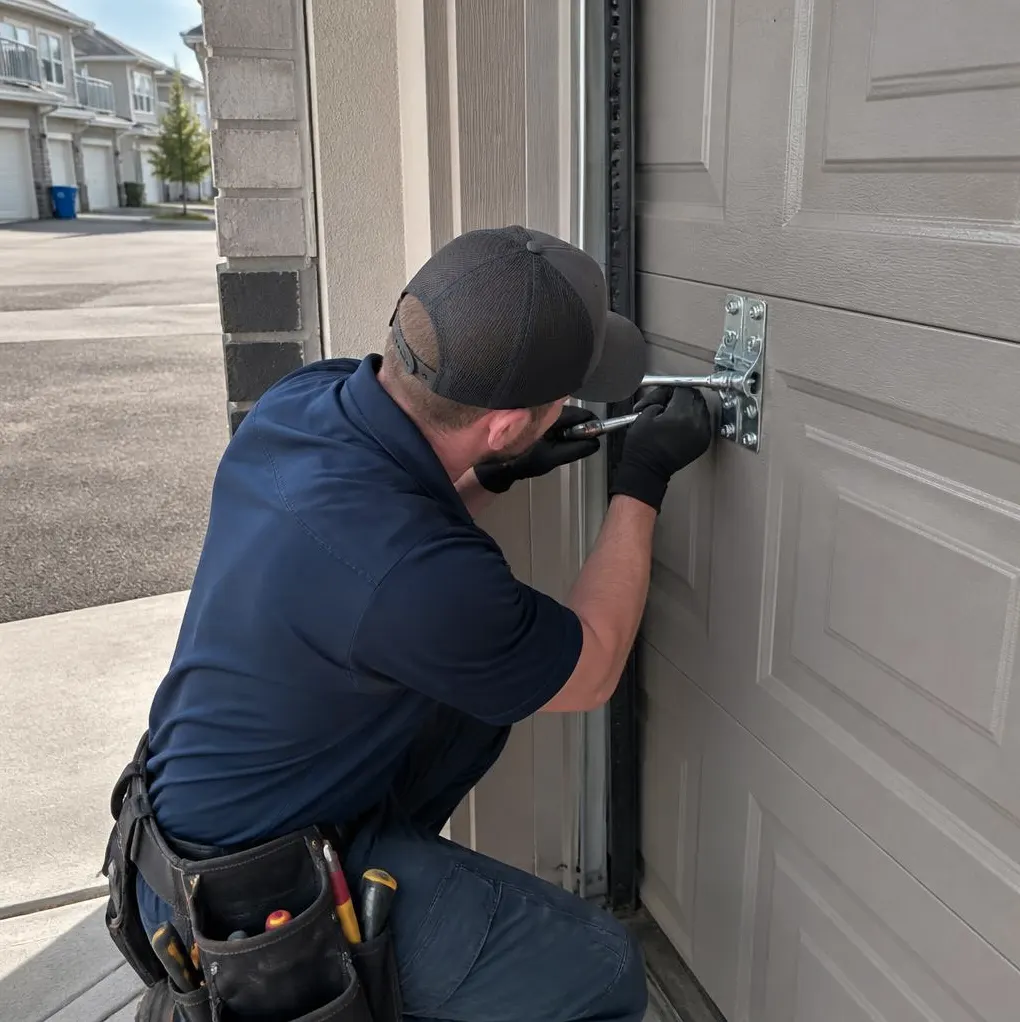
The Short Answer: It's Probably Ice, Not a Broken Spring
If your garage door won't budge on a cold morning, nine times out of ten it's ice gluing the bottom seal to the concrete, not a failed spring. There are two real exceptions worth knowing: if the door was already acting sluggish, noisy, or uneven before the cold snap hit, the cold didn't cause the problem, it just finished off something that was already failing. And if you hear a bang or a loud pop followed by a door that won't move at all, that's almost certainly a broken spring or cable, and cold is just the trigger that pushed worn hardware past its limit.
Signs Your Garage Door Is Fighting the Cold
- Frozen to the floor: the door looks closed normally, but when you hit the opener it strains, shudders, or the opener reverses without the door actually lifting.
- Sluggish or jerky movement: the door opens and closes slower than usual, hesitates partway, or moves in uneven stops instead of one smooth pass.
- Opener straining or clicking off: you hear the motor working harder than normal, or it stops mid-cycle and the light blinks an error pattern.
- Loud grinding or squealing from the rollers or hinges: noise that wasn't there in warmer months, especially right after the first hard freeze.
- Door looks crooked when it's partway open: one side lags behind the other, which points to something more than just surface ice.
What a Technician Checks First, in Order
1. Ice Bonding the Bottom Seal to the Concrete
This is the first and most common culprit, and it's the easiest to rule out. Overnight condensation, melted snow, or a wet driveway can freeze the rubber weatherstripping right to the slab. The fix is simple: never force the opener repeatedly, since that strains the motor and gears for no reason. Instead, break the bond by hand with a plastic scraper or by pouring warm (not boiling) water along the seal, then towel off the excess before it refreezes.
2. Ice, Salt, and Debris Packed in the Tracks
Next, a technician looks at the vertical and horizontal tracks for ice buildup, road salt residue, or frozen grit that's keeping the rollers from riding smoothly. Melted snow tracked in from vehicles is a common source. The fix involves wiping the tracks clean with a dry cloth and checking that the track is dry before the door cycles again, since ice in the track can chip paint, dent the track edge, or throw the rollers off their path.
3. Lubricant That's Thickened or Washed Out
Cold makes standard grease stiffen up, and some all-purpose lubricants thin out and run off in humid weather, leaving rollers and hinges dry by winter. A technician checks the rollers, hinges, and springs for a dry, chalky look or a gummed-up buildup. The fix is cleaning off old residue and reapplying a lithium or silicone-based garage door lubricant rated for temperature swings, applied lightly to moving metal parts, never to the track surface itself.
4. Spring Tension Lost to Cold Metal
Metal contracts in the cold, and torsion and extension springs can lose a small amount of tension as temperatures drop, which is enough to make a marginal spring feel noticeably weaker. If a spring was already near the end of its life cycle, a cold snap is often what pushes it to snap outright. This is checked by watching how the door balances when disconnected from the opener; if it drops instead of holding roughly level, spring replacement is the fix, and it's not a DIY job given the tension involved.
5. Opener Force and Limit Settings
If the door still won't move after the seal, tracks, and lubrication check out, the opener itself comes next. Cold air is denser and parts move with slightly more resistance, so an opener with force settings calibrated for summer conditions may sense extra resistance and stop or reverse the door as a safety measure. The fix is recalibrating the force and limit settings, and while this is doable by hand on most openers, repeated reversing often means a technician should also inspect the drive gear and chain or belt for wear.
6. Track Alignment Shifted by Frost Heave
Last on the list because it's the least common, but worth checking on older homes: ground freezing and thawing can shift a slab or foundation slightly, which over time nudges the track brackets out of alignment. This shows up as a door that binds or rubs unevenly on one side regardless of temperature. The fix involves re-leveling and re-securing the track brackets, sometimes combined with shimming the track itself.
Why This Hits Harder Here
Defiance winters bring real ice, road salt tracked into garages, and big swings between a mild afternoon and a hard overnight freeze. That constant freeze-thaw cycle is tough on rubber seals, exposed hardware, and anything that was already lubricated with the wrong product. Add in humid summers that can wash lubricant off or invite surface rust on springs and hinges, and a door that was borderline in September often becomes a door that won't open in December.
When to Call Defiance Garage Door
If you've cleared ice from the seal and tracks and the door is still sluggish, straining, or hanging unevenly, stop cycling it and call us. A door that fights the opener repeatedly can burn out a motor or snap a weakened spring. We offer Garage Door Maintenance to get lubrication, balance, and hardware squared away before the deep cold sets in, and Spring Replacement for doors that are clearly losing tension or have already broken. Both jobs involve a full inspection of the rollers, cables, and opener settings while we're there, so you're not calling back out for the next cold-weather symptom.
Get Your Door Ready for Winter
A garage door that's struggling in November usually gets worse, not better, as temperatures keep dropping. If yours is sticking, slow, or straining, reach out to Defiance Garage Door and we'll get it running smoothly before the next hard freeze hits Defiance, OH.